




Helpful information ...

Moxy Web - What is an e-commerce platform: a guide for businesses 2026
08.06.2026

What is an e-commerce platform: a guide for businesses 2026

Understand what an e-commerce platform is and how it can improve your online sales. Discover the key benefits for your business in 2026.

What Is an E-Commerce Platform: A Guide for Businesses in 2026


TL;DR:

  • An e-commerce platform enables businesses to manage and grow an online store from a single location, combining processes from sales to analytics. The choice between WooCommerce, Shopify, and Magento should be based on business needs, budget, and technical capabilities. The right platform supports growth, optimizes the sales process, and improves the user experience in the unique conditions of the Slovenian market.

An e-commerce platform is a software solution that enables businesses to establish, manage, and grow an online store from a single place by combining sales, marketing, logistics, and analytics processes into a unified system. In professional terminology, it is often referred to as an online store platform or e-commerce solution. Platforms such as WooCommerce, Shopify, and Magento are no longer merely tools for publishing products—they are comprehensive business systems that directly impact user experience, conversions, and long-term growth. For medium-sized companies looking to strengthen their digital presence, understanding these solutions is the starting point for every strategic decision related to online sales.

What Is an E-Commerce Platform and How Does It Work in Practice?

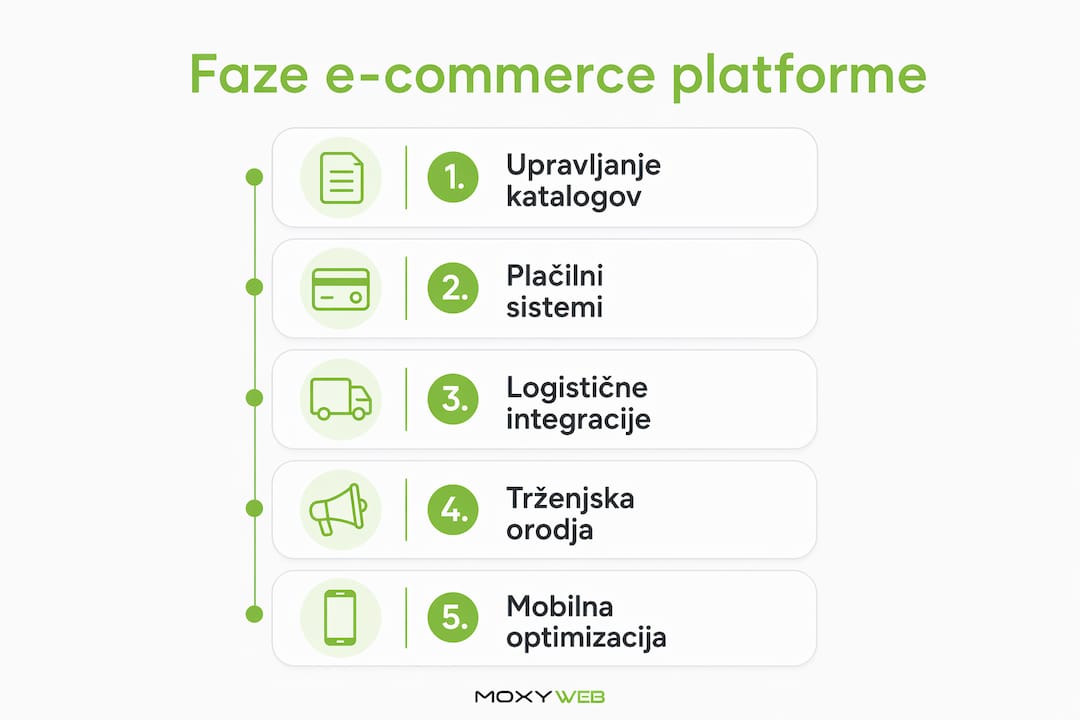
An e-commerce platform functions as the digital core of your online store, coordinating all processes behind the scenes—from displaying products to completing purchases. Understanding its components helps you evaluate which solution best fits your business needs.

An operator's fingers move quickly across a keyboard.

Product and catalog management is the fundamental function of every platform. Through an administrative interface, you can add, edit, and organize products, set prices, manage inventory, and define categories. A well-designed interface allows you to do this without technical expertise, which is a major advantage for managers of medium-sized companies.

Payment systems and transaction security are the next critical elements. Platforms integrate with payment gateways such as Stripe, PayPal, and local payment solutions while ensuring encrypted data transfer through HTTPS and compliance with PCI DSS standards. Good design improves credibility and customer loyalty, while transaction security is the foundation upon which trust in any online store is built.

Logistics integrations are especially important in the Slovenian market. 41% of packages in Slovenia are already delivered to out-of-home locations, meaning platforms without integration with parcel lockers and pickup points lose conversions. Most managers overlook this when choosing a platform, despite its direct impact on customer satisfaction.

Marketing tools and analytics complete the picture. Modern platforms connect with Google Analytics, Meta Pixel, and email marketing tools, providing insight into customer behavior and campaign performance. This integration of data is what separates successful online stores from average ones.

Expert Tip: Before selecting a platform, verify that it supports integrations with the logistics partners you already use. Changing logistics providers after your store is established is expensive and time-consuming.

Overview of the main stages in launching an online store

In addition, mobile traffic accounts for more than 75% of e-commerce website traffic, meaning the platform must be optimized for speed and ease of use on mobile devices. This is not optional—it is the standard.

Comparison of the Best E-Commerce Platforms: WooCommerce, Shopify, and Magento

Choosing among leading platforms is not a matter of which one is objectively best, but which one is best suited to your business model, budget, and technical capabilities. Experts recommend WooCommerce for flexibility, Shopify for rapid deployment, and Magento for large, complex systems.

Platform Flexibility Ease of Use Cost Best For
WooCommerce High Medium Low (open-source) Flexible solutions, WordPress ecosystem
Shopify Medium High Monthly subscription Fast launch, small to medium-sized stores
Magento Very High Low High (development costs) Complex systems, large catalogs

WooCommerce provides complete control over data and operates as a WordPress plugin, making it attractive to companies already using WordPress infrastructure. Shopify is a SaaS solution with integrated hosting that can be launched in days rather than weeks. Magento is intended for businesses with large product catalogs and complex business processes where standard solutions are insufficient.

For medium-sized companies in Slovenia, the decision often comes down to WooCommerce or Shopify. WooCommerce offers greater freedom for customization and lower long-term costs but requires technical support. Shopify is faster to launch and easier to manage, but its monthly subscription fees and customization limitations should be considered in long-term planning.

  • WooCommerce: Suitable for businesses already using WordPress or requiring highly customized functionality without platform limitations.
  • Shopify: Ideal for businesses seeking a fast market entry with minimal technical risk.
  • Magento: Suitable for businesses with thousands of SKUs, complex pricing structures, or international operations.

Expert Tip: Do not choose a platform simply because your competitors use it. Choose it based on your business processes, catalog size, and your team's management capabilities.

Understanding different e-commerce models, such as B2B, B2C, and C2C, is also essential in making this decision. B2B businesses, for example, require features such as negotiated pricing, bulk ordering, and account management, which Shopify does not support as effectively as WooCommerce or Magento.

Benefits of E-Commerce Platforms for Medium-Sized Businesses in Slovenia

E-commerce is not merely a sales channel but the central system of modern business operations, where technology and user experience create a complete ecosystem. For medium-sized companies, this translates into tangible operational and strategic advantages reflected in revenue and competitiveness.

The most important benefits include:

  • Market expansion without physical limitations. An online store allows you to sell 24/7 to customers across Slovenia and internationally without the costs of physical retail locations.
  • Optimization of sales processes. Automating orders, inventory management, and customer notifications reduces manual work and errors, directly improving operational efficiency.
  • Adaptation to local market conditions. Integration with local payment methods and logistics services, including parcel lockers, is an expected standard for Slovenian customers, not an added bonus.
  • Data-driven insight into customer behavior. Real-time analytics show which products are selling, where customers abandon their carts, and which marketing channels deliver results.
  • Scalability without infrastructure reinvestment. As your business grows, the platform grows with you without requiring a complete system replacement.

Scalability is often an underestimated advantage. Companies that start with a smaller store and gradually expand it save time and money compared to those forced to migrate to a new platform after only a few years. Review the key features of a business online store before selecting any solution.

The impact on competitiveness is measurable. Businesses with well-optimized online stores achieve higher conversion rates, lower customer acquisition costs, and stronger customer loyalty than those relying on outdated or poorly adapted systems. For companies targeting international markets, this can be the difference between growth and stagnation.

How to Choose the Right E-Commerce Platform for Your Business

Selecting an e-commerce platform is not a purely technical decision. It is a business decision that will influence your sales processes, marketing activities, customer experience, and future growth for years to come. The platform should support your business strategy rather than force you to adapt your processes to its limitations.

The first factor to consider is the complexity of your product catalog. A company with a small number of products and simple pricing requirements can successfully operate on almost any modern platform. Businesses with extensive catalogs, product variants, multiple pricing levels, or B2B requirements need a solution capable of handling more advanced business logic.

The second factor is your internal technical capacity. If your team has no dedicated technical support and wants a system that is easy to manage, Shopify is often the simplest option. If you require more customization and have access to development resources, WooCommerce provides significantly greater flexibility.

The third factor is integration with existing systems. Most companies already use accounting software, ERP systems, CRM platforms, marketing tools, or logistics providers. The chosen e-commerce platform should integrate smoothly with these systems to avoid manual work and duplicate processes.

Budget is also important, but it should not be viewed solely as an upfront investment. Monthly subscription fees, maintenance costs, development expenses, hosting, and future upgrades all contribute to the total cost of ownership. A cheaper solution today can become more expensive in the long run if it requires constant workarounds and limitations.

Selection Factor Questions to Consider
Product Catalog How many products, variants, and pricing structures do you have?
Technical Resources Do you have access to developers or technical support?
Integrations Does the platform connect with your ERP, CRM, and logistics systems?
Growth Plans Can the platform support expansion into new markets and channels?
Total Cost What are the long-term costs beyond the initial setup?

Expert Tip: Choose the platform that supports your business three years from now, not just the one that solves today's challenges.

Common Mistakes When Choosing an E-Commerce Platform

One of the most common mistakes is choosing a platform based solely on price. While cost is important, focusing exclusively on the lowest upfront investment often results in limitations that hinder growth and require costly migrations later.

Another mistake is underestimating scalability. A platform that works perfectly for a catalog of fifty products may struggle when that catalog grows to several thousand. Companies that do not consider future growth often find themselves rebuilding their online store sooner than expected.

Businesses also frequently overlook integration requirements. A platform may appear attractive at first glance, but if it cannot connect effectively with existing systems, operational inefficiencies quickly emerge. Manual data entry, inventory discrepancies, and inconsistent customer information are common consequences.

The fourth mistake is focusing too heavily on design while neglecting functionality. A visually attractive online store is valuable, but if the checkout process is complicated, inventory data is inaccurate, or the site loads slowly, conversions will suffer regardless of appearance.

Finally, many companies fail to involve all relevant stakeholders in the decision-making process. Sales, marketing, logistics, customer service, and management often have different requirements. A successful platform selection considers the needs of the entire organization rather than just one department.

E-commerce platforms continue to evolve rapidly. Features that were once considered advanced are becoming standard expectations. Businesses planning long-term growth should understand the trends shaping the future of online commerce.

Artificial intelligence is increasingly being integrated into e-commerce systems. AI-powered product recommendations, dynamic pricing, customer support automation, and predictive analytics help businesses improve customer experience while increasing efficiency.

Headless commerce is gaining popularity among growing companies. This approach separates the front-end customer experience from the back-end commerce engine, allowing businesses to create highly customized digital experiences across websites, mobile apps, kiosks, and other channels.

Omnichannel commerce is becoming a standard requirement. Customers expect a consistent experience regardless of whether they interact with a brand through a website, social media platform, mobile application, physical store, or marketplace.

Automation and integration continue to expand. Modern businesses increasingly expect their e-commerce platform to function as part of a broader digital ecosystem that includes ERP systems, CRM software, logistics platforms, marketing automation tools, and customer service solutions.

Businesses that select a platform capable of adapting to these developments will be better positioned to remain competitive as customer expectations continue to evolve.

Key Takeaways

An e-commerce platform is much more than a website for selling products. It is a central business system that influences operations, customer experience, and long-term growth.

Key Point Summary
E-commerce platforms centralize operations They combine sales, marketing, logistics, and analytics into a single system.
No platform is universally best The right choice depends on business goals, technical resources, and operational complexity.
WooCommerce, Shopify, and Magento serve different needs Each platform offers distinct advantages depending on business requirements.
Integrations are critical Platforms should connect seamlessly with ERP, CRM, payment, and logistics systems.
Scalability matters The platform should support future growth without requiring a complete rebuild.

E-Commerce Platforms Are a Business Decision, Not Just a Technical One

When companies begin planning an online store, they often focus first on design, features, or price. In reality, the platform selection has a much greater impact than any visual element. It determines how efficiently your team operates, how easily customers can buy from you, and how well the business can adapt as it grows.

In my experience, the most successful projects begin by understanding business processes rather than technology. Companies that clearly define their sales model, operational workflows, customer expectations, and growth plans make better platform decisions and avoid costly mistakes later.

One lesson that consistently proves true is that flexibility becomes more valuable over time. Business requirements rarely stay the same. New sales channels emerge, product catalogs expand, and customer expectations evolve. A platform that can adapt to these changes provides a significant long-term advantage.

Another important observation is that integrations often matter more than features. Most modern platforms offer similar functionality on the surface. The real difference appears when the platform needs to work with accounting software, ERP systems, logistics providers, marketing tools, and other critical business applications.

Ultimately, a good e-commerce platform should reduce complexity rather than create it. It should allow your team to focus on growing the business instead of managing technical limitations.

— Ziga

How Moxy Web Helps Businesses Build Successful Online Stores

At Moxy Web, we help businesses choose, develop, and optimize e-commerce platforms that align with real business goals. Our approach focuses on creating scalable solutions that integrate seamlessly with existing systems, support long-term growth, and deliver an excellent customer experience.

Whether you need a WooCommerce store, a Shopify solution, a custom e-commerce platform, or complex ERP and logistics integrations, our goal is the same: to build a digital sales system that supports measurable business results. By combining technical expertise with a strong understanding of business processes, we help companies create online stores that remain effective as they grow.

FAQ

What Is an E-Commerce Platform?

An e-commerce platform is software that allows businesses to create, manage, and grow an online store while integrating sales, payments, inventory management, marketing, and analytics into a single system.

Which E-Commerce Platform Is Best for Small and Medium-Sized Businesses?

There is no universal answer. WooCommerce is often ideal for businesses that need flexibility and customization, while Shopify is well-suited for companies seeking a fast and simple launch. Magento is generally better suited to larger and more complex operations.

Does an E-Commerce Platform Need to Integrate with an ERP System?

Not always, but integration becomes increasingly important as a business grows. ERP integration helps automate inventory management, order processing, pricing, and reporting while reducing manual work and errors.

How Much Does an E-Commerce Platform Cost?

Costs vary significantly depending on the platform and project scope. Open-source solutions such as WooCommerce have lower software costs but may require development and maintenance, while SaaS solutions such as Shopify involve ongoing subscription fees.

Can I Change Platforms Later?

Yes, but migration can be time-consuming and costly. That is why it is important to choose a platform that supports both your current needs and future growth plans from the beginning.

Moxy Web - PWA or a business app – which one to choose?
PWA or app? Discover the differences, costs, and use cases, and choose the digital solution that will truly make the path to purchase easier for your users today.
Moxy Web - OAuth2 for Web Applications: A Practical Guide for Developers
A practical guide for developers: secure web implementation of OAuth2 using Authorization Code with PKCE, JWT, and refresh token rotation (S256).
Moxy Web - Can I edit the content on the page myself?
Can I manage the content myself? Yes—provided the website is designed to be independent of the developer. Check what features it needs to offer.
Archive
15. 9. 2026
PWA or a business app – which one to choose?
15. 9. 2026
OAuth2 for Web Applications: A Practical Guide for Developers
14. 9. 2026
Can I edit the content on the page myself?
14. 9. 2026
SSO Login for Applications: A Practical Guide for IT Professionals
13. 9. 2026
How to reduce failed online payments
13. 9. 2026
DNS Record Settings: A Practical Guide to Safely Managing Your Domain
12. 9. 2026
Guide to Implementing a Seamless CRM Integration
12. 9. 2026
Headless E-commerce: When Headless Architecture Justifies the Investment
11. 9. 2026
Guide to migrating a site without costly mistakes
11. 9. 2026
B2B Online Store: How It Transforms Sales and Ordering for Businesses
10. 9. 2026
Key landing page elements for more responses
10. 9. 2026
3 content that makes a B2B website a generator of qualified customers
9. 9. 2026
A guide to optimizing core website metrics
9. 9. 2026
Multi-tenant application: a metadata approach for developers and CTOs
8. 9. 2026
Online security for businesses without unnecessary risks
8. 9. 2026
WordPress: Server Caching, What to Cache and When to Flush
7. 9. 2026
Example of CRM connection between website and sales
7. 9. 2026
Quickly deploy and scale PWAs in 7 steps for businesses
6. 9. 2026
When to revamp an outdated company website?
6. 9. 2026
How leaders decide to redesign a company logo without losing its identity
5. 9. 2026
Support after launching a web project
5. 9. 2026
Streamline approvals in 30-60 days: Content approval workflow for marketing teams
4. 9. 2026
Best practices for protecting user data
4. 9. 2026
10 steps to integrating SSO with Microsoft Entra ID for IT professionals
3. 9. 2026
How to protect forms from online abuse
3. 9. 2026
When to order a dark mode website for businesses so it doesn't fall apart
2. 9. 2026
How much does an app cost for your business?
2. 9. 2026
Prevent role explosion: RBAC user roles for IT and development
1. 9. 2026
Time-saving company user portal
1. 9. 2026
Operators: Check RTO, RPO, and site recoverability within 30 days
31. 8. 2026
Best practices for corporate web design
31. 8. 2026
Implement two-factor login in CMS for administrators in four steps
30. 8. 2026
Example of integrating a web application with logistics
30. 8. 2026
Measure in production: Core Web Vitals audit for developers and marketers
29. 8. 2026
Overview of content management tools for businesses
29. 8. 2026
3-5 KPIs for websites and instructions for GA4, GSC and Matomo
28. 8. 2026
What does website accessibility mean for a business?
28. 8. 2026
Legally compliant online store in Slovenia: what you need to arrange
27. 8. 2026
The future of headless online stores in practice
27. 8. 2026
Headless CMS: what is it and who really benefits from it
26. 8. 2026
Web Analytics Guide for Better Decisions
26. 8. 2026
Online store renovation: when is the time and how to start
25. 8. 2026
Example of a user portal for companies
25. 8. 2026
WAF for Web Applications: How It Works and When You Need It
24. 8. 2026
The best portal features for efficient work
24. 8. 2026
Transactional Email in Ecommerce: What to Edit First
23. 8. 2026
Web analytics for better business decisions
23. 8. 2026
Why data is important when building a website
22. 8. 2026
Elements of trust of the decision-making party
22. 8. 2026
User Interface Easy Management Guide
21. 8. 2026
Website data security without the guesswork
21. 8. 2026
What are security protocols for websites and applications?
20. 8. 2026
How to speed up a page without losing functionality
20. 8. 2026
What is user experience and why does management decide about it?
19. 8. 2026
The future of custom development for companies today
19. 8. 2026
Why data backups are important for every business
18. 8. 2026
Best practices for mobile user experience
18. 8. 2026
What is digital transformation and why is it important for businesses?
17. 8. 2026
How to design an administrative user interface
17. 8. 2026
Why SEO is important for marketers and businesses
16. 8. 2026
Optimizing inquiry forms for multiple customers
16. 8. 2026
Page Load Speed: A Business Guide for Decision Makers
15. 8. 2026
Example of a sales-oriented website redesign
15. 8. 2026
SPA or MPA: which architecture suits your project?
14. 8. 2026
Key elements of an effective product page
14. 8. 2026
Mobile first approach: a guide for developers and site owners
13. 8. 2026
UX design for companies with a clear goal
13. 8. 2026
Online advertising for entrepreneurs and marketers in Slovenia
12. 8. 2026
Mobile-friendly business website sales
12. 8. 2026
UX research: what it is and how to conduct it step by step
11. 8. 2026
Best online ordering solutions in practice
11. 8. 2026
Microservices Architecture: An In-Depth Explanation and Decision Guide
10. 8. 2026
How to connect external systems: a practical guide for businesses
10. 8. 2026
Why do I need SSL on my website?
10. 8. 2026
How to edit a multilingual website for foreign markets
9. 8. 2026
What does unique website design mean for businesses?
8. 8. 2026
Online Backup Guide for Businesses
8. 8. 2026
The role of mobile adaptability for businesses in Slovenia
7. 8. 2026
An example of reducing abandoned online shopping carts
7. 8. 2026
Stripe vs PayPal for a Slovenian company: which one to choose?
6. 8. 2026
A guide to revamping your online store without the guesswork
6. 8. 2026
WooCommerce vs Shopify: Which Platform is Right for You?
5. 8. 2026
Dedicated hosting or shared hosting?
5. 8. 2026
What is an SSL certificate and why does your website absolutely need one?
4. 8. 2026
The most important features of a business website
4. 8. 2026
External Systems Integration Guide for Enterprises
3. 8. 2026
Rental platform or your own store for growth?
3. 8. 2026
The best website building tools for businesses
2. 8. 2026
What does monthly website maintenance include?
2. 8. 2026
Business app feature list: top 20 by priority
1. 8. 2026
How to arrange secure website hosting
1. 8. 2026
Types of Hosting for Businesses: A Practical Guide 2026
31. 7. 2026
Project Technical Specification Guide
31. 7. 2026
Website design for companies in Slovenia
30. 7. 2026
Best integrations for online business
30. 7. 2026
Price of website development in Slovenia 2026
29. 7. 2026
How to prepare web application functionalities
29. 7. 2026
Websites for businesses: a guide to making the right decision
28. 7. 2026
Hiring an agency or a freelancer - what to choose?
28. 7. 2026
Editing Websites with WordPress: A Guide 2026
27. 7. 2026
Business Hosting Review for Enterprises
27. 7. 2026
Independent website creation for beginners
26. 7. 2026
The best CMS for business growth is not always the same
26. 7. 2026
Steps to improve website user experience
25. 7. 2026
Manage inventory in your online store without the guesswork
25. 7. 2026
Why automate processes in your company?
24. 7. 2026
When to choose a custom store design?
24. 7. 2026
Benefits of freelance content editing for businesses
23. 7. 2026
Trends in the development of online stores in 2026
23. 7. 2026
Domain Registration Guide: Step by Step
22. 7. 2026
Development of web portals that support growth
22. 7. 2026
What is data security and how to protect data
21. 7. 2026
Custom development or Shopify: what to choose?
21. 7. 2026
The role of analytics in the development of strategic HR management
20. 7. 2026
A guide to developing a custom web application
20. 7. 2026
Digital Presence: Key Steps for Businesses in 2026
19. 7. 2026
A company's digital strategy that brings business
19. 7. 2026
Website Redesign: A Guide for Entrepreneurs 2026
18. 7. 2026
B2B portal that simplifies ordering for customers
18. 7. 2026
Creating a WordPress website for businesses: a guide 2026
17. 7. 2026
How much does it cost to maintain a store per month?
17. 7. 2026
The role of technological innovation for business competitiveness
16. 7. 2026
Custom CMS or WordPress for business growth
16. 7. 2026
List of CMS Platforms for Enterprise: A Guide for Managers 2026
15. 7. 2026
How to choose a web developer without making costly mistakes
15. 7. 2026
Why professional hosting determines the success of a website
14. 7. 2026
WordPress or a custom website for growth?
14. 7. 2026
Examples of modern design: inspiration for projects 2026
13. 7. 2026
Website integration with CRM without losing leads
13. 7. 2026
What is content strategy: a guide for businesses
12. 7. 2026
Example of revamping an outdated website
12. 7. 2026
Benefits of Responsive Design for Businesses in 2026
11. 7. 2026
User experience personalization trends
11. 7. 2026
How to plan your company's digital transformation in 2026
10. 7. 2026
Web application or Excel - what to choose?
10. 7. 2026
Why content management is key to your success
9. 7. 2026
An example of a successful B2B online store
9. 7. 2026
The role of external systems integration in business
8. 7. 2026
Best practices for product filters
8. 7. 2026
The process of creating a graphic image: a guide for 2026
7. 7. 2026
When does a company need a website redesign?
7. 7. 2026
Why use API integrations in business?
6. 7. 2026
Trends in business web systems security
6. 7. 2026
Why user analytics is important for growth
5. 7. 2026
Business online security without empty promises
5. 7. 2026
How to Set Up Hosting for a Business: Guide 2026
4. 7. 2026
Evaluation of CMS solutions for businesses without fogging
4. 7. 2026
What is Graphic Design: A Guide for Businesses 2026
3. 7. 2026
Hire an agency or develop in-house?
3. 7. 2026
What is a domain and why every business needs one
2. 7. 2026
Why a business needs a web application
2. 7. 2026
Why security updates are important in 2026
1. 7. 2026
Content strategy for a business page
1. 7. 2026
Top 4 agency alternatives for novisplet.com 2026
30. 6. 2026
Does a company need its own CMS?
30. 6. 2026
What is Modern Design: A Guide for Businesses 2026
29. 6. 2026
How to choose the right domain for your business
29. 6. 2026
What is a corporate visual identity: a guide for 2026
28. 6. 2026
Overview of online commerce platforms
28. 6. 2026
How to Design Responsive Websites: A 2026 Guide
27. 6. 2026
How to choose an online store structure
27. 6. 2026
Marketing checklist for a company's digital presence
26. 6. 2026
Best features for a B2B portal
26. 6. 2026
What is User Experience Personalization: A Guide 2026
25. 6. 2026
Shopify or custom store?
25. 6. 2026
Digital Strategy Creation Workflow: Guide 2026
24. 6. 2026
What does custom development mean in practice?
24. 6. 2026
How technical support works: a guide for entrepreneurs
23. 6. 2026
What are design standards: a guide for businesses
23. 6. 2026
How long does it take to create a store?
22. 6. 2026
How to prepare a brief for a website
22. 6. 2026
UX Design Best Practices for Digital Professionals
21. 6. 2026
Business Systems Integration Guide
21. 6. 2026
Workflow for digital company presentation: guide 2026
20. 6. 2026
Best solutions for content editing
20. 6. 2026
Why choose custom development for your business?
19. 6. 2026
Landing page design that sells
19. 6. 2026
Tips for easily managing content in your company
18. 6. 2026
Purchase funnel optimization that sells
18. 6. 2026
Top 6 alternatives to moxy-designs.com in 2026
17. 6. 2026
Top mistakes in website redesign
17. 6. 2026
Top 6 alternatives to mojaspletka.si agencies 2026
16. 6. 2026
What is included in web hosting?
16. 6. 2026
Benefits of scalable applications for growing businesses
15. 6. 2026
Responsive website design without compromise
15. 6. 2026
The Role of Digital Presence for Business Growth 2026
14. 6. 2026
The Role of Automation in Business: A Guide to 2026
14. 6. 2026
Website user experience counts
13. 6. 2026
Tips for improving your digital presence in 2026
13. 6. 2026
How to prepare content for a website
12. 6. 2026
What is website accessibility: a guide for entrepreneurs
12. 6. 2026
Website maintenance for businesses
11. 6. 2026
Benefits of the Modular Web for Businesses in 2026
11. 6. 2026
Trouble-free maintenance of online systems
10. 6. 2026
Step by step: creating a portal for entrepreneurs
10. 6. 2026
A B2B online store that really accelerates sales
9. 6. 2026
The role of digital strategy for business growth in 2026
9. 6. 2026
Managing website content without chaos
8. 6. 2026
What is an e-commerce platform: a guide for businesses 2026
8. 6. 2026
How to connect an online store to ERP
7. 6. 2026
The Role of Fast Page Loading for Entrepreneurs 2026
7. 6. 2026
Guide to redesigning your business website
6. 6. 2026
Content Editing Steps: A Guide for Businesses 2026
6. 6. 2026
How to improve website conversions
5. 6. 2026
Why use an SSL certificate for a secure website?
5. 6. 2026
A booking system that really saves time
4. 6. 2026
The Role of SEO for Businesses: Growth Strategy 2026
4. 6. 2026
How long does it take to develop a web application?
3. 6. 2026
Web Application Development Guide 2026
3. 6. 2026
Payment system integration for online stores
2. 6. 2026
The Role of Analytics in Digital Business: A Guide to 2026
2. 6. 2026
Website or store - what to choose?
1. 6. 2026
GDPR v spletnem okolju: vodnik za podjetja 2026
1. 6. 2026
How is the development of an online store going?
31. 5. 2026
Top 6 how much does it cost to create an agency website 2026
31. 5. 2026
Online Business Automation Trends 2026
30. 5. 2026
The role of artificial intelligence in the web: a guide to 2026
30. 5. 2026
Website Migration Guide
29. 5. 2026
What is front-end development: a guide for 2026
29. 5. 2026
Online User Experience Trends 2026
28. 5. 2026
Website Design: A Guide for Entrepreneurs 2026
28. 5. 2026
Trends in the development of business portals in practice
27. 5. 2026
List of mandatory online store functionalities 2026
27. 5. 2026
When does it make sense to redesign a website?
26. 5. 2026
What is a landing page and why is it key to sales?
26. 5. 2026
How to design a business website
25. 5. 2026
Website Hosting Guide: Choosing and ManagingWebsite Hosting Guide: Choosing and Managing
25. 5. 2026
How to edit content without a programmer
24. 5. 2026
What is UX on the web: a guide for entrepreneurs
24. 5. 2026
WordPress or custom development?
23. 5. 2026
Individual approach in web development: why it matters
23. 5. 2026
Corporate graphic image price: what influences it
22. 5. 2026
A Guide to Website Design in 2026
22. 5. 2026
Creating a custom website pays off
21. 5. 2026
Website Maintenance Process: A Guide for Businesses
21. 5. 2026
The best functionalities of a business online store
20. 5. 2026
Website Creation Checklist: Guide 2026
20. 5. 2026
Creating online stores for businesses
19. 5. 2026
Website Development: A Practical Guide for Entrepreneurs
19. 5. 2026
Business systems integration without chaos
18. 5. 2026
The most common mistakes in developing web solutions
18. 5. 2026
Website support that really works
17. 5. 2026
Examples of aesthetic website design
17. 5. 2026
B2B portal development guide
16. 5. 2026
Definition of Modern Web Development: A Guide for Entrepreneurs
16. 5. 2026
Pre-built platform or custom solution?
15. 5. 2026
Web application scalability: the key to business growth
15. 5. 2026
How to improve website speed
14. 5. 2026
What is web hosting and how to choose the right solution
14. 5. 2026
A guide to a secure business website
13. 5. 2026
Top 10 online trends for businesses: digital growth 2026
13. 5. 2026
A business website that works for a company
12. 5. 2026
Why test online solutions for business success
12. 5. 2026
Choosing an online store platform
11. 5. 2026
Examples of integrating web tools for efficient business
11. 5. 2026
Graphic design for a company that sells
10. 5. 2026
Step by step to successful web application development
10. 5. 2026
UX design of an online store that sells
9. 5. 2026
What is an online store and how to set one up successfully
9. 5. 2026
Graphic design of the overall image
8. 5. 2026
Investing in a website: The key to business growth
8. 5. 2026
Renovate an outdated website without the guesswork
7. 5. 2026
What is a web application and how does it help your business?
7. 5. 2026
How Website Maintenance Works
6. 5. 2026
Effectively Managing Website Content: A Guide for Businesses
6. 5. 2026
Responsive website for business
5. 5. 2026
What is online branding and how does it improve your appearance?
5. 5. 2026
Custom CMS for your business or off-the-shelf solution?
4. 5. 2026
Business Process Automation with a Web Application
4. 5. 2026
Web architecture: the key to a better online presence
3. 5. 2026
Online store integration with delivery
3. 5. 2026
How to design unique online solutions for business growth
2. 5. 2026
Connecting your online store to your accounting
2. 5. 2026
Explaining modern web applications for business growth
1. 5. 2026
What is e-commerce? Everything SMEs need to know to succeed
1. 5. 2026
Corporate Website Security Without Illusions
30. 4. 2026
Top 4 oxmo.si alternatives 2026
30. 4. 2026
Registering a domain name for your business without mistakes
29. 4. 2026
Static vs. Dynamic Website: What It Means for Your Business
29. 4. 2026
Business Website Hosting
28. 4. 2026
Web Design Trends for a Better Digital Presence
28. 4. 2026
Website Maintenance - Price and Reality
27. 4. 2026
How to Build an Online Store
27. 4. 2026
Top 6 mojbiz.si alternatives 2026
26. 4. 2026
What does building a website involve?
26. 4. 2026
Modern Technologies for Successful Web Development and Growth
25. 4. 2026
When is a custom web application the right choice?
25. 4. 2026
8 Benefits of a Modern Online Store for Business Success
24. 4. 2026
How to Optimize Your Website for Better Results
24. 4. 2026
Creating an online store - price without fog
23. 4. 2026
Why Website Speed ​​Is Key to Success
23. 4. 2026
How much does it cost to create a website?