




Helpful information ...

Moxy Web - What is Modern Design: A Guide for Businesses 2026
30.06.2026

What is Modern Design: A Guide for Businesses 2026

Discover what modern design is and how it can improve your digital identity and customer relationships. Read more!

What Is Contemporary Design: A Guide for Businesses in 2026


In brief:

  • Contemporary design combines technology, humanity, and conceptual depth to create a lasting digital presence. Unlike the historically defined Modernist style, it embraces an organic, asymmetrical approach that emphasizes local identity. It prioritizes authenticity, sustainability, and adaptability, fostering long-term trust and user engagement.

Contemporary design is a defined approach that combines technological advancements, such as artificial intelligence and 3D design, with deep humanity and thoughtful conceptual thinking. Unlike the Modern style, which originates from a specific historical period, contemporary design always reflects the time in which it is created and continuously adapts to new needs. For businesses, this means that design strengthens digital identity when it goes beyond aesthetics and becomes a tool for building genuine relationships with users. It is this ability to communicate meaningfully that distinguishes successful digital presences from average ones.

What Is Contemporary Design and How Does It Differ from the Modern Style?

Contemporary design is not synonymous with Modern design. The Modern style refers to a movement with a clearly defined historical context that flourished during the first half of the 20th century and was based on functionality, geometry, and the elimination of ornamentation. Contemporary design, on the other hand, is a living, evolving phenomenon that always reflects the present moment and incorporates hybrid approaches. Contemporary design combines the past with the future to create functional and practical solutions rather than adhering to a single aesthetic canon.

The difference between the two styles becomes clear through practical examples. Modern design favors strict symmetry, clean lines, and neutral colors. Contemporary design, however, embraces asymmetry, organic forms, and local identity as equally valid design choices. Rigid grid systems are giving way to more organic, asymmetrical layouts where structure remains present but in a subtler and more natural way. This means that a website or visual identity no longer has to follow strict rules to feel cohesive and easy to navigate.

Modularity as the Foundation of the Contemporary Approach

An excellent example of contemporary design is the K67 kiosk, designed by Slovenian designer Saša Mächtig in 1966. It was built around interchangeable modules with exceptional versatility, giving it remarkable longevity and adaptability across a wide variety of environments worldwide. Contemporary projects expand on this principle by incorporating energy efficiency and sustainability. Modularity is not merely a design technique—it is a philosophy that enables a solution to grow alongside the client's needs.

Feature Modern Design Contemporary Design
Timeframe Historically defined movement Always current and evolving
Aesthetics Geometry, symmetry, minimalism Organic forms, asymmetry, hybridity
Approach One dominant style Adaptability and local identity
Values Functionality over ornamentation Sustainability, purpose, humanity

The key characteristics of contemporary design include:

  • Conceptual depth: Every design decision carries meaning and communicates the brand's values.
  • Adaptability: The solution adjusts to different devices, markets, and needs without losing its identity.
  • Authenticity: Local culture and the company's unique story become part of its visual communication.
  • Sustainability: Materials, processes, and digital solutions take long-term environmental and ethical standards into account.
  • A balance between technology and people: AI and automation are tools—not replacements for thoughtful design.

How Contemporary Design Influences a Company's Digital Presence

Contemporary design directly affects how users perceive your company online. Design shapes relationships and structures user behavior, making it essential for a sustainable digital presence. Maja Vardjan, Director of the Museum of Architecture and Design, emphasizes that design is not merely a visual style but a tool for building relationships. This perspective is especially valuable for businesses because it means that good design sells without relying on aggressive advertising.

A young digital design specialist working at a computer with dual monitors.

Companies that focus on purpose and humanity build stronger connections with their audience. Generic digital content that looks like thousands of other websites does not inspire trust. Adaptability and authenticity are essential for standing out in a saturated digital marketplace. A company that incorporates local identity or a unique story into its visual identity gains recognition that competitors cannot easily replicate.

Practical steps to strengthen your digital presence through contemporary design:

  1. Define the message before the aesthetics. First answer the question of what your brand wants to communicate, and only then choose colors, typography, and layout.
  2. Incorporate local identity. Photos, illustrations, or stories that reflect your environment and culture build authenticity that global templates cannot replace.
  3. Ensure responsiveness across all devices. Contemporary design should be equally compelling on desktop computers, tablets, and smartphones.
  4. Maintain conceptual consistency. Every element—from the logo to the purchase button—should align with your company's values and message.
  5. Measure engagement, not just aesthetics. Time on page, bounce rate, and conversions are the metrics that reveal whether the design is truly effective.

Expert tip: Before redesigning your website, audit your existing visual communication. Identify which elements build trust and which undermine it. Redesigning without this analysis often reproduces the same mistakes in a new visual style.

What Are the Key Contemporary Design Trends in 2026?

The year 2026 marks a clear shift in how businesses understand design. The focus is moving away from how quickly something can be created toward how thoughtfully it is designed. This is not merely a philosophical idea but a practical direction that influences every project, from a logo to an entire web platform.

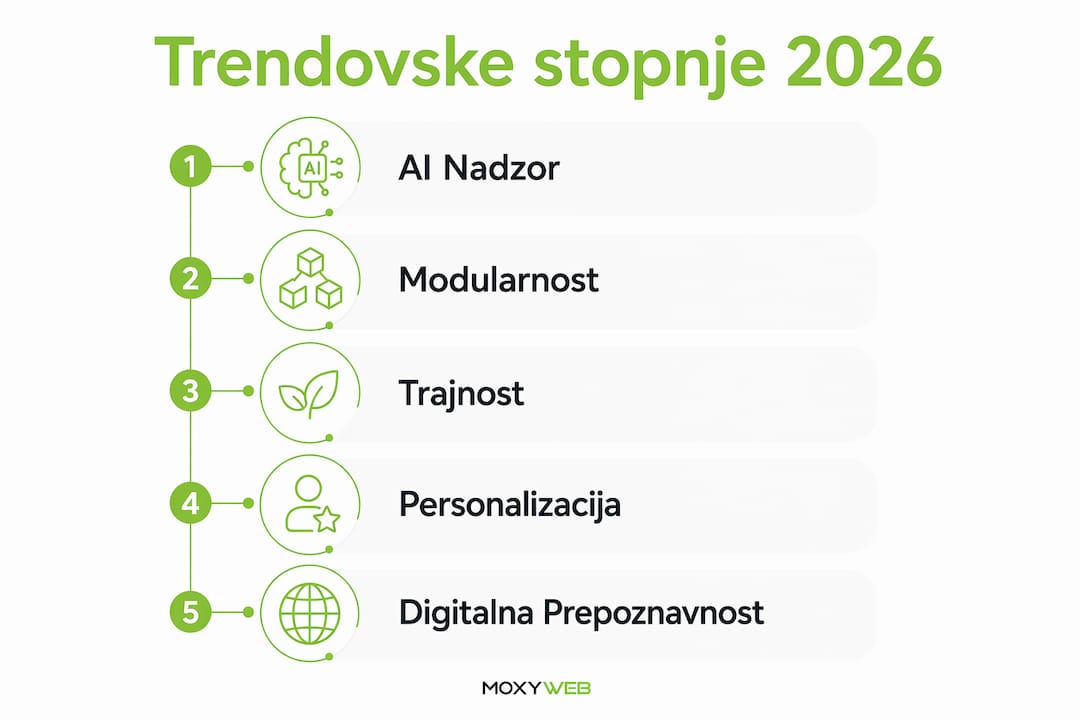
Current contemporary design trends in 2026 include:

  • Balancing AI with the human touch. Artificial intelligence is a powerful tool, but its outputs often lack identity. Contemporary design requires human input and conceptual depth that AI cannot replace.
  • Organic and asymmetrical layouts. Softer, more natural compositions are replacing rigid grid systems. Websites that embrace this trend feel more dynamic and engaging.
  • Sustainability as a standard, not a trend. Sustainability and ethical responsibility are no longer marketing trends but industry standards. Consumers are increasingly rejecting consumption-driven approaches that generate unnecessary waste.
  • Local identity as a competitive advantage. The growing demand for authenticity is driving the creation of content that reflects a company's unique cultural context.
  • 3D elements and spatial depth. Three-dimensional visual elements add depth to digital interfaces and increase user engagement.
Trend Impact on Digital Presence
AI with human oversight Faster production while preserving brand identity
Organic layouts Higher engagement and longer time spent on site
Sustainable approach Stronger trust and long-term customer loyalty
Local identity Unique recognition that competitors cannot easily copy
3D visuals Greater visual appeal and a more modern appearance

Expert tip: When introducing AI tools into your design process, always establish clear brand identity guidelines. AI can generate variations, but deciding which variation truly reflects your company's values remains a human responsibility.

Infographic: Key Contemporary Design Trends for 2026

How to Use Contemporary Design to Differentiate Your Business in the Digital Marketplace

Standing out in the digital marketplace requires more than an attractive appearance. Businesses that succeed create authentic, locally relevant content that builds long-term relationships with their audience. This means design is not a one-time investment but an ongoing process of aligning visual communication with the company's values and business goals.

Practical approaches to differentiation through design:

  • Develop a complete visual identity with a story. Your logo, color palette, and typography should work together to tell your company's story. Without a story, they are simply visual elements without meaning.
  • Invest in high-quality graphic design that drives sales. Visual communication aligned with business objectives delivers measurable results.
  • Adopt a modular approach. Create visual elements that can be combined and adapted across different channels—from your website to social media—without sacrificing consistency.
  • Integrate sustainability into your visual communication. Sustainability significantly influences brand recognition and consumer trust. Demonstrate these values visually, not just through words.
  • Follow user experience trends on the web. Design that reflects user behavior and expectations achieves higher conversion rates.

The biggest mindset shift for 2026 is moving away from asking "How should it look?" toward asking "What should it communicate?" and "How can it perform most effectively?" Businesses that embrace this shift build digital presences that outlast passing trends and remain relevant for years to come.

Key Takeaways

Contemporary design is most effective when it combines conceptual depth, authenticity, and thoughtful use of technology into a cohesive digital experience that builds long-term trust.

Key Point Details
Definition of contemporary design Contemporary design combines technology and humanity to create meaningful, adaptable solutions.
Difference from the Modern style Modern design is historically defined, whereas contemporary design continuously adapts to the present.
Impact on digital presence Authentic, concept-driven design builds trust and increases user engagement.
Key trends for 2026 Balancing AI with human creativity, organic layouts, and sustainability define contemporary design in 2026.
Market differentiation Local identity and a cohesive visual identity are the most effective ways to stand out.

Contemporary Design Is Not Decoration—It's a Decision

When I work with companies redesigning their digital presence, I notice the same mistake over and over again. Clients come in asking for a "modern look," believing it's simply a matter of choosing the right colors or a trendy typeface. In reality, it's about deciding what the company wants to communicate and to whom. Without that answer, every design solution is merely decoration without substance.

What truly excites me in 2026 is the shift in mindset I'm seeing among more forward-thinking clients. More and more businesses understand that a cohesive visual identity is not an expense but an investment in long-term brand recognition. These companies no longer ask, "How much does a logo cost?" Instead, they ask, "How does our design build trust with our audience?" That's the right place to start.

My experience shows that companies investing in conceptual depth and authenticity don't need aggressive advertising to the same extent as those relying on generic templates. Good design works for you 24 hours a day without additional costs. Poor design, on the other hand, drives customers away before they even read your offer. That's the difference I see every day.

— Ziga

Moxy-web: Design That Builds Digital Brand Recognition

Moxy-web helps businesses that understand the value of contemporary design and want to turn that value into measurable digital results. Its approach is based on treating every project individually, aligning visual identity with the client's business goals and core values. The Moxy-web team develops websites, visual identities, and digital solutions that are not only visually refined but also function as tools for business growth. If you want to elevate your digital presence to reflect the true value of your company, explore the complete design services available at Moxy-web.com and take the first step toward lasting brand recognition.

Frequently Asked Questions

What Does Contemporary Design Mean in Practice?

Contemporary design means creating visual solutions that combine technology, conceptual depth, and authenticity to achieve specific business goals. It is not limited to a single style but adapts to the needs of the business and the expectations of its audience.

How Does Contemporary Design Differ from Modern Design?

Modern design is a historical movement from the first half of the 20th century, emphasizing geometry and functionality. Contemporary design is a living approach that always reflects the current moment while embracing hybrid aesthetics, sustainability, and local identity.

What Are Examples of Contemporary Design in the Digital Environment?

Examples of contemporary design include websites with organic layouts, cohesive visual identities rooted in local culture, and digital interfaces that balance AI-generated content with thoughtful human design.

Why Is Sustainability Part of Contemporary Design?

Sustainability has become a standard in contemporary design because consumers are increasingly rejecting consumption-driven approaches. Companies that integrate sustainable values into their visual communication build long-term trust and customer loyalty.

How Does Contemporary Design Affect User Engagement?

Businesses that incorporate conceptual depth and authenticity into their digital design achieve higher levels of user engagement. Design that clearly communicates values and reflects a company's identity captures attention and encourages interaction.

Recommended Reading

Moxy Web - 7 features of an effective B2B sales portal
Discover 7 features of an effective B2B portal that save buyers time, reduce errors for the sales team, and give the company better control over every purchase.
Moxy Web - Company structured data: a guide to immediate visibility improvement
Combine Organization, BreadcrumbList, and FAQPage into JSON-LD to enhance the company's visibility in rich results and AI-powered tools.
Moxy Web - PWA or a business app – which one to choose?
PWA or app? Discover the differences, costs, and use cases, and choose the digital solution that will truly make the path to purchase easier for your users today.
Archive
16. 9. 2026
7 features of an effective B2B sales portal
16. 9. 2026
Company structured data: a guide to immediate visibility improvement
15. 9. 2026
PWA or a business app – which one to choose?
15. 9. 2026
OAuth2 for Web Applications: A Practical Guide for Developers
14. 9. 2026
Can I edit the content on the page myself?
14. 9. 2026
SSO Login for Applications: A Practical Guide for IT Professionals
13. 9. 2026
How to reduce failed online payments
13. 9. 2026
DNS Record Settings: A Practical Guide to Safely Managing Your Domain
12. 9. 2026
Guide to Implementing a Seamless CRM Integration
12. 9. 2026
Headless E-commerce: When Headless Architecture Justifies the Investment
11. 9. 2026
Guide to migrating a site without costly mistakes
11. 9. 2026
B2B Online Store: How It Transforms Sales and Ordering for Businesses
10. 9. 2026
Key landing page elements for more responses
10. 9. 2026
3 content that makes a B2B website a generator of qualified customers
9. 9. 2026
A guide to optimizing core website metrics
9. 9. 2026
Multi-tenant application: a metadata approach for developers and CTOs
8. 9. 2026
Online security for businesses without unnecessary risks
8. 9. 2026
WordPress: Server Caching, What to Cache and When to Flush
7. 9. 2026
Example of CRM connection between website and sales
7. 9. 2026
Quickly deploy and scale PWAs in 7 steps for businesses
6. 9. 2026
When to revamp an outdated company website?
6. 9. 2026
How leaders decide to redesign a company logo without losing its identity
5. 9. 2026
Support after launching a web project
5. 9. 2026
Streamline approvals in 30-60 days: Content approval workflow for marketing teams
4. 9. 2026
Best practices for protecting user data
4. 9. 2026
10 steps to integrating SSO with Microsoft Entra ID for IT professionals
3. 9. 2026
How to protect forms from online abuse
3. 9. 2026
When to order a dark mode website for businesses so it doesn't fall apart
2. 9. 2026
How much does an app cost for your business?
2. 9. 2026
Prevent role explosion: RBAC user roles for IT and development
1. 9. 2026
Time-saving company user portal
1. 9. 2026
Operators: Check RTO, RPO, and site recoverability within 30 days
31. 8. 2026
Best practices for corporate web design
31. 8. 2026
Implement two-factor login in CMS for administrators in four steps
30. 8. 2026
Example of integrating a web application with logistics
30. 8. 2026
Measure in production: Core Web Vitals audit for developers and marketers
29. 8. 2026
Overview of content management tools for businesses
29. 8. 2026
3-5 KPIs for websites and instructions for GA4, GSC and Matomo
28. 8. 2026
What does website accessibility mean for a business?
28. 8. 2026
Legally compliant online store in Slovenia: what you need to arrange
27. 8. 2026
The future of headless online stores in practice
27. 8. 2026
Headless CMS: what is it and who really benefits from it
26. 8. 2026
Web Analytics Guide for Better Decisions
26. 8. 2026
Online store renovation: when is the time and how to start
25. 8. 2026
Example of a user portal for companies
25. 8. 2026
WAF for Web Applications: How It Works and When You Need It
24. 8. 2026
The best portal features for efficient work
24. 8. 2026
Transactional Email in Ecommerce: What to Edit First
23. 8. 2026
Web analytics for better business decisions
23. 8. 2026
Why data is important when building a website
22. 8. 2026
Elements of trust of the decision-making party
22. 8. 2026
User Interface Easy Management Guide
21. 8. 2026
Website data security without the guesswork
21. 8. 2026
What are security protocols for websites and applications?
20. 8. 2026
How to speed up a page without losing functionality
20. 8. 2026
What is user experience and why does management decide about it?
19. 8. 2026
The future of custom development for companies today
19. 8. 2026
Why data backups are important for every business
18. 8. 2026
Best practices for mobile user experience
18. 8. 2026
What is digital transformation and why is it important for businesses?
17. 8. 2026
How to design an administrative user interface
17. 8. 2026
Why SEO is important for marketers and businesses
16. 8. 2026
Optimizing inquiry forms for multiple customers
16. 8. 2026
Page Load Speed: A Business Guide for Decision Makers
15. 8. 2026
Example of a sales-oriented website redesign
15. 8. 2026
SPA or MPA: which architecture suits your project?
14. 8. 2026
Key elements of an effective product page
14. 8. 2026
Mobile first approach: a guide for developers and site owners
13. 8. 2026
UX design for companies with a clear goal
13. 8. 2026
Online advertising for entrepreneurs and marketers in Slovenia
12. 8. 2026
Mobile-friendly business website sales
12. 8. 2026
UX research: what it is and how to conduct it step by step
11. 8. 2026
Best online ordering solutions in practice
11. 8. 2026
Microservices Architecture: An In-Depth Explanation and Decision Guide
10. 8. 2026
How to connect external systems: a practical guide for businesses
10. 8. 2026
Why do I need SSL on my website?
10. 8. 2026
How to edit a multilingual website for foreign markets
9. 8. 2026
What does unique website design mean for businesses?
8. 8. 2026
Online Backup Guide for Businesses
8. 8. 2026
The role of mobile adaptability for businesses in Slovenia
7. 8. 2026
An example of reducing abandoned online shopping carts
7. 8. 2026
Stripe vs PayPal for a Slovenian company: which one to choose?
6. 8. 2026
A guide to revamping your online store without the guesswork
6. 8. 2026
WooCommerce vs Shopify: Which Platform is Right for You?
5. 8. 2026
Dedicated hosting or shared hosting?
5. 8. 2026
What is an SSL certificate and why does your website absolutely need one?
4. 8. 2026
The most important features of a business website
4. 8. 2026
External Systems Integration Guide for Enterprises
3. 8. 2026
Rental platform or your own store for growth?
3. 8. 2026
The best website building tools for businesses
2. 8. 2026
What does monthly website maintenance include?
2. 8. 2026
Business app feature list: top 20 by priority
1. 8. 2026
How to arrange secure website hosting
1. 8. 2026
Types of Hosting for Businesses: A Practical Guide 2026
31. 7. 2026
Project Technical Specification Guide
31. 7. 2026
Website design for companies in Slovenia
30. 7. 2026
Best integrations for online business
30. 7. 2026
Price of website development in Slovenia 2026
29. 7. 2026
How to prepare web application functionalities
29. 7. 2026
Websites for businesses: a guide to making the right decision
28. 7. 2026
Hiring an agency or a freelancer - what to choose?
28. 7. 2026
Editing Websites with WordPress: A Guide 2026
27. 7. 2026
Business Hosting Review for Enterprises
27. 7. 2026
Independent website creation for beginners
26. 7. 2026
The best CMS for business growth is not always the same
26. 7. 2026
Steps to improve website user experience
25. 7. 2026
Manage inventory in your online store without the guesswork
25. 7. 2026
Why automate processes in your company?
24. 7. 2026
When to choose a custom store design?
24. 7. 2026
Benefits of freelance content editing for businesses
23. 7. 2026
Trends in the development of online stores in 2026
23. 7. 2026
Domain Registration Guide: Step by Step
22. 7. 2026
Development of web portals that support growth
22. 7. 2026
What is data security and how to protect data
21. 7. 2026
Custom development or Shopify: what to choose?
21. 7. 2026
The role of analytics in the development of strategic HR management
20. 7. 2026
A guide to developing a custom web application
20. 7. 2026
Digital Presence: Key Steps for Businesses in 2026
19. 7. 2026
A company's digital strategy that brings business
19. 7. 2026
Website Redesign: A Guide for Entrepreneurs 2026
18. 7. 2026
B2B portal that simplifies ordering for customers
18. 7. 2026
Creating a WordPress website for businesses: a guide 2026
17. 7. 2026
How much does it cost to maintain a store per month?
17. 7. 2026
The role of technological innovation for business competitiveness
16. 7. 2026
Custom CMS or WordPress for business growth
16. 7. 2026
List of CMS Platforms for Enterprise: A Guide for Managers 2026
15. 7. 2026
How to choose a web developer without making costly mistakes
15. 7. 2026
Why professional hosting determines the success of a website
14. 7. 2026
WordPress or a custom website for growth?
14. 7. 2026
Examples of modern design: inspiration for projects 2026
13. 7. 2026
Website integration with CRM without losing leads
13. 7. 2026
What is content strategy: a guide for businesses
12. 7. 2026
Example of revamping an outdated website
12. 7. 2026
Benefits of Responsive Design for Businesses in 2026
11. 7. 2026
User experience personalization trends
11. 7. 2026
How to plan your company's digital transformation in 2026
10. 7. 2026
Web application or Excel - what to choose?
10. 7. 2026
Why content management is key to your success
9. 7. 2026
An example of a successful B2B online store
9. 7. 2026
The role of external systems integration in business
8. 7. 2026
Best practices for product filters
8. 7. 2026
The process of creating a graphic image: a guide for 2026
7. 7. 2026
When does a company need a website redesign?
7. 7. 2026
Why use API integrations in business?
6. 7. 2026
Trends in business web systems security
6. 7. 2026
Why user analytics is important for growth
5. 7. 2026
Business online security without empty promises
5. 7. 2026
How to Set Up Hosting for a Business: Guide 2026
4. 7. 2026
Evaluation of CMS solutions for businesses without fogging
4. 7. 2026
What is Graphic Design: A Guide for Businesses 2026
3. 7. 2026
Hire an agency or develop in-house?
3. 7. 2026
What is a domain and why every business needs one
2. 7. 2026
Why a business needs a web application
2. 7. 2026
Why security updates are important in 2026
1. 7. 2026
Content strategy for a business page
1. 7. 2026
Top 4 agency alternatives for novisplet.com 2026
30. 6. 2026
Does a company need its own CMS?
30. 6. 2026
What is Modern Design: A Guide for Businesses 2026
29. 6. 2026
How to choose the right domain for your business
29. 6. 2026
What is a corporate visual identity: a guide for 2026
28. 6. 2026
Overview of online commerce platforms
28. 6. 2026
How to Design Responsive Websites: A 2026 Guide
27. 6. 2026
How to choose an online store structure
27. 6. 2026
Marketing checklist for a company's digital presence
26. 6. 2026
Best features for a B2B portal
26. 6. 2026
What is User Experience Personalization: A Guide 2026
25. 6. 2026
Shopify or custom store?
25. 6. 2026
Digital Strategy Creation Workflow: Guide 2026
24. 6. 2026
What does custom development mean in practice?
24. 6. 2026
How technical support works: a guide for entrepreneurs
23. 6. 2026
What are design standards: a guide for businesses
23. 6. 2026
How long does it take to create a store?
22. 6. 2026
How to prepare a brief for a website
22. 6. 2026
UX Design Best Practices for Digital Professionals
21. 6. 2026
Business Systems Integration Guide
21. 6. 2026
Workflow for digital company presentation: guide 2026
20. 6. 2026
Best solutions for content editing
20. 6. 2026
Why choose custom development for your business?
19. 6. 2026
Landing page design that sells
19. 6. 2026
Tips for easily managing content in your company
18. 6. 2026
Purchase funnel optimization that sells
18. 6. 2026
Top 6 alternatives to moxy-designs.com in 2026
17. 6. 2026
Top mistakes in website redesign
17. 6. 2026
Top 6 alternatives to mojaspletka.si agencies 2026
16. 6. 2026
What is included in web hosting?
16. 6. 2026
Benefits of scalable applications for growing businesses
15. 6. 2026
Responsive website design without compromise
15. 6. 2026
The Role of Digital Presence for Business Growth 2026
14. 6. 2026
The Role of Automation in Business: A Guide to 2026
14. 6. 2026
Website user experience counts
13. 6. 2026
Tips for improving your digital presence in 2026
13. 6. 2026
How to prepare content for a website
12. 6. 2026
What is website accessibility: a guide for entrepreneurs
12. 6. 2026
Website maintenance for businesses
11. 6. 2026
Benefits of the Modular Web for Businesses in 2026
11. 6. 2026
Trouble-free maintenance of online systems
10. 6. 2026
Step by step: creating a portal for entrepreneurs
10. 6. 2026
A B2B online store that really accelerates sales
9. 6. 2026
The role of digital strategy for business growth in 2026
9. 6. 2026
Managing website content without chaos
8. 6. 2026
What is an e-commerce platform: a guide for businesses 2026
8. 6. 2026
How to connect an online store to ERP
7. 6. 2026
The Role of Fast Page Loading for Entrepreneurs 2026
7. 6. 2026
Guide to redesigning your business website
6. 6. 2026
Content Editing Steps: A Guide for Businesses 2026
6. 6. 2026
How to improve website conversions
5. 6. 2026
Why use an SSL certificate for a secure website?
5. 6. 2026
A booking system that really saves time
4. 6. 2026
The Role of SEO for Businesses: Growth Strategy 2026
4. 6. 2026
How long does it take to develop a web application?
3. 6. 2026
Web Application Development Guide 2026
3. 6. 2026
Payment system integration for online stores
2. 6. 2026
The Role of Analytics in Digital Business: A Guide to 2026
2. 6. 2026
Website or store - what to choose?
1. 6. 2026
GDPR v spletnem okolju: vodnik za podjetja 2026
1. 6. 2026
How is the development of an online store going?
31. 5. 2026
Top 6 how much does it cost to create an agency website 2026
31. 5. 2026
Online Business Automation Trends 2026
30. 5. 2026
The role of artificial intelligence in the web: a guide to 2026
30. 5. 2026
Website Migration Guide
29. 5. 2026
What is front-end development: a guide for 2026
29. 5. 2026
Online User Experience Trends 2026
28. 5. 2026
Website Design: A Guide for Entrepreneurs 2026
28. 5. 2026
Trends in the development of business portals in practice
27. 5. 2026
List of mandatory online store functionalities 2026
27. 5. 2026
When does it make sense to redesign a website?
26. 5. 2026
What is a landing page and why is it key to sales?
26. 5. 2026
How to design a business website
25. 5. 2026
Website Hosting Guide: Choosing and ManagingWebsite Hosting Guide: Choosing and Managing
25. 5. 2026
How to edit content without a programmer
24. 5. 2026
What is UX on the web: a guide for entrepreneurs
24. 5. 2026
WordPress or custom development?
23. 5. 2026
Individual approach in web development: why it matters
23. 5. 2026
Corporate graphic image price: what influences it
22. 5. 2026
A Guide to Website Design in 2026
22. 5. 2026
Creating a custom website pays off
21. 5. 2026
Website Maintenance Process: A Guide for Businesses
21. 5. 2026
The best functionalities of a business online store
20. 5. 2026
Website Creation Checklist: Guide 2026
20. 5. 2026
Creating online stores for businesses
19. 5. 2026
Website Development: A Practical Guide for Entrepreneurs
19. 5. 2026
Business systems integration without chaos
18. 5. 2026
The most common mistakes in developing web solutions
18. 5. 2026
Website support that really works
17. 5. 2026
Examples of aesthetic website design
17. 5. 2026
B2B portal development guide
16. 5. 2026
Definition of Modern Web Development: A Guide for Entrepreneurs
16. 5. 2026
Pre-built platform or custom solution?
15. 5. 2026
Web application scalability: the key to business growth
15. 5. 2026
How to improve website speed
14. 5. 2026
What is web hosting and how to choose the right solution
14. 5. 2026
A guide to a secure business website
13. 5. 2026
Top 10 online trends for businesses: digital growth 2026
13. 5. 2026
A business website that works for a company
12. 5. 2026
Why test online solutions for business success
12. 5. 2026
Choosing an online store platform
11. 5. 2026
Examples of integrating web tools for efficient business
11. 5. 2026
Graphic design for a company that sells
10. 5. 2026
Step by step to successful web application development
10. 5. 2026
UX design of an online store that sells
9. 5. 2026
What is an online store and how to set one up successfully
9. 5. 2026
Graphic design of the overall image
8. 5. 2026
Investing in a website: The key to business growth
8. 5. 2026
Renovate an outdated website without the guesswork
7. 5. 2026
What is a web application and how does it help your business?
7. 5. 2026
How Website Maintenance Works
6. 5. 2026
Effectively Managing Website Content: A Guide for Businesses
6. 5. 2026
Responsive website for business
5. 5. 2026
What is online branding and how does it improve your appearance?
5. 5. 2026
Custom CMS for your business or off-the-shelf solution?
4. 5. 2026
Business Process Automation with a Web Application
4. 5. 2026
Web architecture: the key to a better online presence
3. 5. 2026
Online store integration with delivery
3. 5. 2026
How to design unique online solutions for business growth
2. 5. 2026
Connecting your online store to your accounting
2. 5. 2026
Explaining modern web applications for business growth
1. 5. 2026
What is e-commerce? Everything SMEs need to know to succeed
1. 5. 2026
Corporate Website Security Without Illusions
30. 4. 2026
Top 4 oxmo.si alternatives 2026
30. 4. 2026
Registering a domain name for your business without mistakes
29. 4. 2026
Static vs. Dynamic Website: What It Means for Your Business
29. 4. 2026
Business Website Hosting
28. 4. 2026
Web Design Trends for a Better Digital Presence
28. 4. 2026
Website Maintenance - Price and Reality
27. 4. 2026
How to Build an Online Store
27. 4. 2026
Top 6 mojbiz.si alternatives 2026
26. 4. 2026
What does building a website involve?
26. 4. 2026
Modern Technologies for Successful Web Development and Growth
25. 4. 2026
When is a custom web application the right choice?
25. 4. 2026
8 Benefits of a Modern Online Store for Business Success
24. 4. 2026
How to Optimize Your Website for Better Results
24. 4. 2026
Creating an online store - price without fog
23. 4. 2026
Why Website Speed ​​Is Key to Success
23. 4. 2026
How much does it cost to create a website?